

Gaza's infants face malnutrition as families turn to desperate feeding measures
A humanitarian crisis unfolds
In the heart of Gaza, families are grappling with a worsening humanitarian crisis as infant formula becomes nearly unattainable. In a makeshift beach tent, three-month-old Muntaha winces as her grandmother feeds her chickpea paste through a syringe. The grainy mixture, though painful for the baby, is the only nutrition available.
“If she could speak, she’d scream at us, asking what we’re feeding her,” said her aunt, Abir Hamouda.
Muntaha’s story is one of many in Gaza, where babies too young for solid food are left starving. Infant formula shortages have reached critical levels, exacerbating malnutrition and forcing families into desperate measures.
A tragic start to life
Muntaha’s circumstances are particularly tragic. Her mother was struck by a bullet during pregnancy, gave birth prematurely while unconscious in intensive care, and passed away shortly after. Muntaha now weighs just 3.5 kilograms (7.7 pounds)—barely half the typical weight of a baby her age. She suffers from vomiting and diarrhea after every feeding.
Her grandmother, Nemah Hamouda, expressed her fears: “We named her after her mother, hoping she can survive and live long. But we are so afraid—we hear of children and adults dying of hunger every day.”
The growing desperation of families
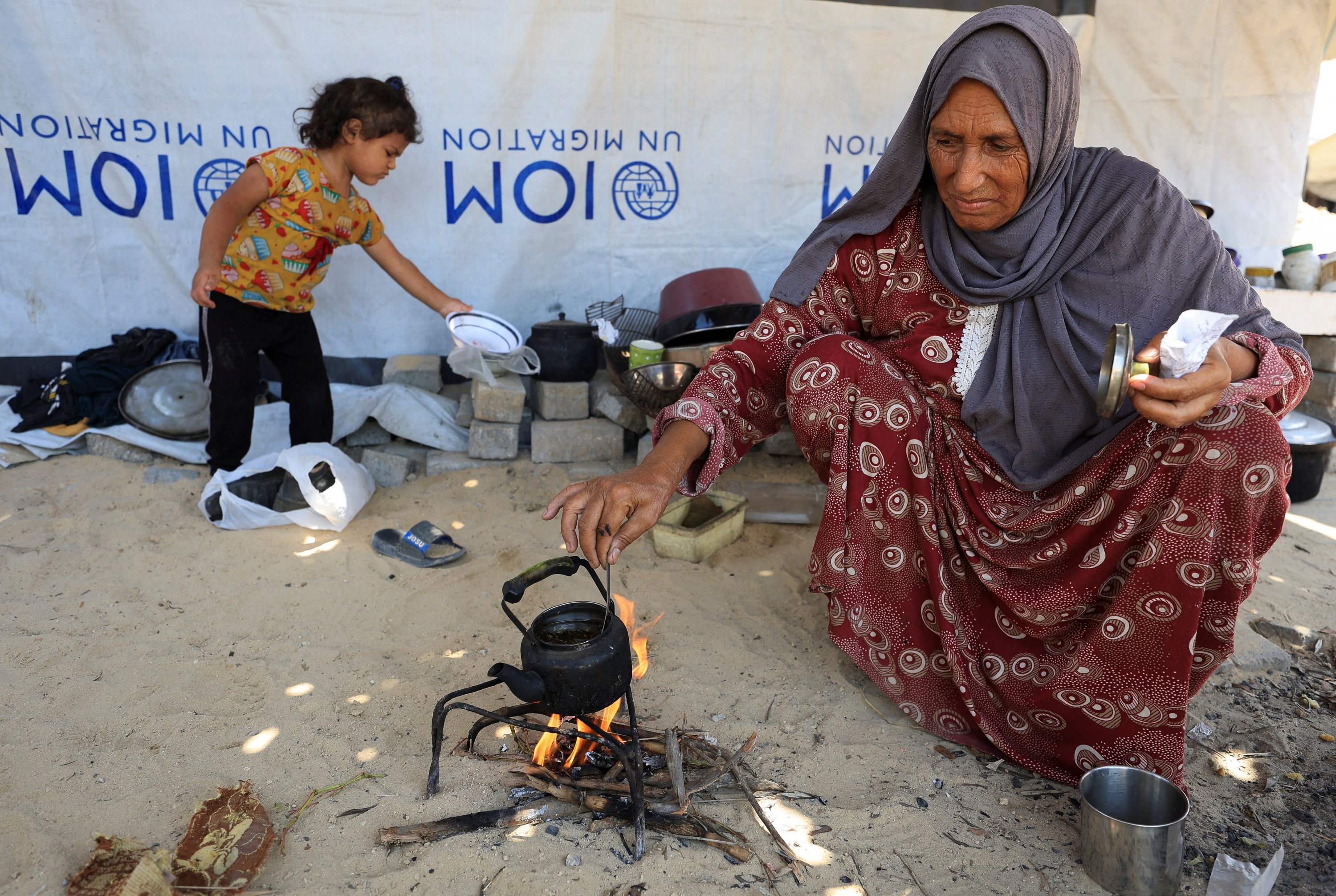
With infant formula scarce, families are resorting to feeding their babies boiled herbs, tea, ground bread, legumes, and sesame seeds. In extreme cases, parents have boiled leaves, eaten animal feed, or even ground sand into flour. Pediatric health experts warn that these desperate measures can cause malnutrition, gastrointestinal issues, and choking hazards.
“It’s a desperate move to compensate for the lack of food,” said Salim Oweis, UNICEF’s spokesperson. “Mothers are grinding anything they can find—chickpeas, bread, rice—but these are not suitable for infants and pose significant health risks.”
At Al-Aqsa Martyrs Hospital in Deir al-Balah, supplies of infant formula have nearly run out. Medical staff describe feeling helpless as children’s health deteriorates. One mother, Azhar Imad, explained how she uses tahini mixed with water as a milk substitute, but her four-month-old daughter cannot tolerate it.
“If the hunger continues,” warned Dr. Khalil Daqran from the hospital, “within three or four days, if the child doesn’t get access to milk, they will die.”
Rising hunger-related deaths
The crisis has already claimed lives. Gazan officials report that 154 people, including 89 children, have died from hunger-related causes, most of them in recent weeks. The World Food Program (WFP) has warned of a worst-case scenario of famine unless immediate action is taken.
Despite international outrage and Israel’s announcement of steps to ease aid access, the U.N. World Food Program revealed that it still lacks the permissions necessary to deliver sufficient assistance. Humanitarian agencies report that infant formula is nearly gone from Gaza’s markets, with a single can costing more than $100—an impossible sum for most families.
Accusations and blame
The crisis has sparked a blame game. Israel and the U.S. accuse Hamas of diverting aid, a claim Hamas denies. Meanwhile, the U.N. insists it has found no evidence of significant aid theft but accuses Israel of weaponizing hunger to exert control over Gaza.
For families like Muntaha’s, these political disputes offer no solace. Displaced from their home and with the baby’s father out of work after his falafel shop closed due to the war, their focus remains on survival.
In Gaza, desperation continues to grow as children face malnutrition and families fight to keep them alive in the absence of basic necessities.
-
22:30
-
22:00
-
21:30
-
21:00
-
20:30
-
19:00
-
18:30
-
18:00
-
17:30
-
17:00
-
16:30
-
16:00
-
15:40
-
15:20
-
15:00
-
14:40
-
14:20
-
14:00
-
13:40
-
13:20
-
13:00
-
12:40
-
12:20
-
12:05
-
11:45
-
11:30
-
11:15
-
11:00
-
10:45
-
10:30
-
10:15
-
10:00
-
09:40
-
09:25
-
09:10
-
08:50
-
08:35
-
08:20
-
23:00
