

Turbinate hypertrophy: causes, symptoms and evidence based treatments
Nasal turbinates comprise three main pairs, superior, middle and inferior, along the lateral walls of the nasal cavity, with a supreme pair in some people. These bony projections are covered in ciliated mucosa and erectile tissue. They warm, humidify and filter inspired air while directing it to olfactory regions. The inferior turbinates are independent scroll shaped bones averaging 5 cm long. They dominate airflow resistance and drain the maxillary, frontal and anterior ethmoid sinuses. Their vascular supply from sphenopalatine arteries enables dynamic swelling in the nasal cycle. This alternates congestion every few hours.
Hypertrophy enlarges these turbinates, primarily the inferior ones, causing persistent obstruction. Allergies account for 40 to 60 percent of cases through IgE mediated inflammation that swells cavernous tissue. Nonallergic rhinitis, chronic rhinosinusitis and viral infections contribute in a similar way by recruiting eosinophils and cytokines. Irritants such as tobacco smoke, ozone and occupational dusts provoke rebound vasodilation. Deviated septums induce compensatory hypertrophy on the concave side. Rhinitis medicamentosa from prolonged alpha adrenergic spray use and pregnancy rhinitis add reversible edema. Prevalence reaches 10 to 20 percent in adults, and is higher in atopic and urban populations.
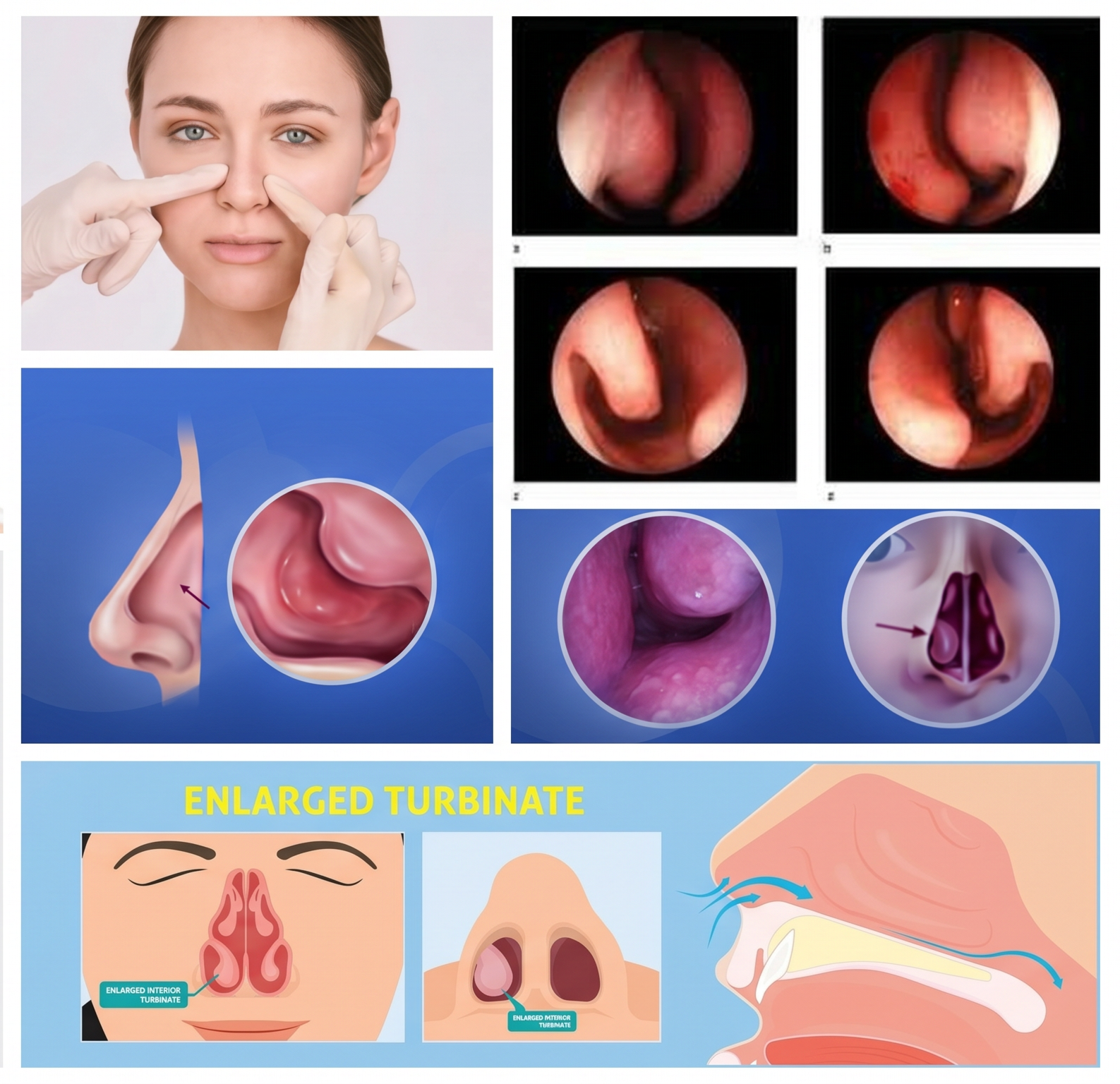
Patients report unilateral or bilateral nasal obstruction, often alternating, that disrupts sleep and exercise. Mouth breathing dries the oral mucosa and can lead to dental caries, halitosis and pharyngitis. Postnasal drip triggers cough, throat clearing and a globus sensation. Associated headaches may localize to the frontal sinuses. Hyposmia impairs taste and safety. Snoring can progress to obstructive sleep apnea in 30 percent of severe cases, increasing cardiovascular risk. Recurrent sinusitis may occur due to mucus stasis. CT scans may show mucosal thickening over 6 mm, and NOSE scores often exceed 45 out of 100. Rhinomanometry can measure airflow resistance above 1 Pa per cubic centimeter per second.
Medical therapy is effective in 70 to 80 percent of mild to moderate cases. Intranasal corticosteroids such as fluticasone reduce turbinate volume by 20 to 30 percent within weeks and are more effective than oral antihistamines. Saline irrigation helps clear allergens when used twice daily. Ipratropium can reduce rhinorrhea. Allergen immunotherapy may provide long term desensitization over three years in selected patients. Procedural options are used when medical treatment fails. Radiofrequency ablation reduces tissue volume submucosally in outpatient settings and can lower NOSE scores by about 50 percent after 12 months with less than 5 percent crusting. Diode laser therapy precisely vaporizes tissue. Microdebrider turbinoplasty removes bone and soft tissue in a controlled manner. Placebo responses in sham procedures can reach 30 to 40 percent, which highlights the importance of careful patient selection using endoscopy.
Surgical options aim to balance effectiveness, safety and preservation of function. Microdebrider assisted turbinoplasty has the lowest complication rate at about 2 percent, compared with 15 percent for electrocautery. Preserving the mucosa helps prevent empty nose syndrome, which is characterized by a paradoxical feeling of obstruction and atrophic rhinitis. Radiofrequency treatment induces fibrosis without damaging the surface and is suitable for children. Partial turbinectomy can restore airflow to less than 0.5 Pa per cubic centimeter per second over the long term. Postoperative care includes antibiotics, topical ointments and humidification. Recurrence remains under 10 percent when allergies are well controlled. Multidisciplinary care, including allergists, improves outcomes and reduces revision rates above 20 percent.
-
19:00
-
18:40
-
18:25
-
18:10
-
17:47
-
17:33
-
17:17
-
17:00
-
16:42
-
16:24
-
16:22
-
16:22
-
16:21
-
16:13
-
16:13
-
16:12
-
16:12
-
16:05
-
15:45
-
15:28
-
15:10
-
14:47
-
14:32
-
14:15
-
14:00
-
13:47
-
13:32
-
13:15
-
13:00
-
12:44
-
12:25
-
12:10
-
11:47
-
11:30
-
11:18
-
11:15
-
11:00
-
10:48
-
10:42
-
10:25
-
10:15
-
10:14
-
10:10
-
10:09
-
10:02
-
09:47
-
09:32
-
09:15
-
09:00
-
08:43
-
08:35
-
08:24
-
08:08
-
08:08
-
07:47
-
07:30
-
07:15
