

How US inflation evolved across history and presidencies
Inflation in the United States has experienced significant fluctuations over the past century, reflecting broader economic trends, crises, and policy decisions. The consumer price index (CPI), the primary measure of price changes, tracks how much more consumers pay annually for a consistent basket of goods and services. Since 1914, average inflation has hovered around 3.3 percent annually, though it has spiked dramatically during wars, supply shocks, and shifts in economic policy. The record high occurred in 1920, when inflation surged to 23.7 percent following World War I.
The Federal Reserve and the "Great Inflation" era
The establishment of the Federal Reserve in 1913 introduced new dynamics to inflation trends. Inflation became more persistent at times, particularly during the “Great Inflation” of the mid-1960s through the early 1980s. This period saw sustained price increases, with inflation peaking above 14 percent by 1980. Policymakers eventually curbed these pressures by implementing higher interest rates and tighter monetary policies, bringing inflation back to moderate levels by the mid-1980s.
Inflation trends across presidential terms
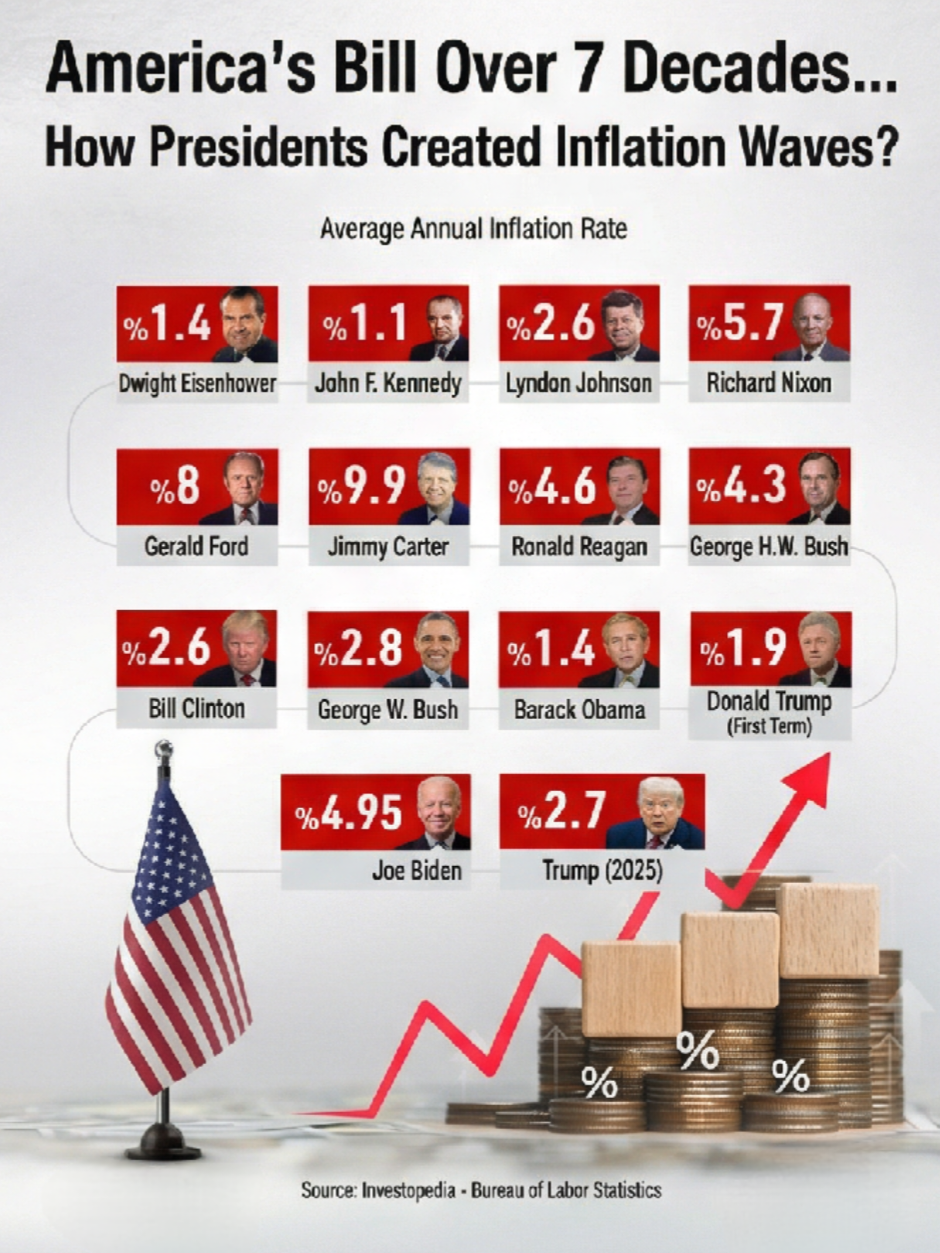
Presidential terms reveal how inflation has varied based on economic conditions and policy choices. In the early 1960s, inflation was relatively low, averaging around 1 percent annually as the economy grew. However, the 1970s marked a period of double-digit inflation, driven by energy crises and fiscal challenges, with price increases under some administrations surpassing 8 percent annually. The 1980s and 1990s witnessed a decline in inflation, stabilizing at single-digit levels. The 21st century largely saw modest inflation until disruptions from the COVID-19 pandemic and global supply chain constraints drove inflation above 7 percent in 2021, reaching historic peaks by 2022.
Inflation's impact on policy and the public
Today, inflation remains a central concern for policymakers and the public alike. It directly impacts living costs, interest rates, and economic confidence. Persistent inflation can erode purchasing power, shape central bank strategies, and influence political and economic debates, underscoring its lasting significance in economic policymaking.
-
17:15
-
17:00
-
16:45
-
16:30
-
16:15
-
16:00
-
15:45
-
15:30
-
15:15
-
15:00
-
14:52
-
14:45
-
14:30
-
14:06
-
13:10
-
12:55
-
12:40
-
12:25
-
12:10
-
11:55
-
11:40
-
11:35
-
11:32
-
11:20
-
11:17
-
11:17
-
11:12
-
11:08
-
11:07
-
11:07
-
11:05
-
10:57
-
10:56
-
10:56
-
10:56
-
10:50
-
10:35
-
10:20
-
10:05
-
09:50
-
09:35
-
09:20
-
09:05
-
08:55
-
08:40
-
07:25
