

Morocco’s path to ethical and sustainable cobalt-free batteries
As the global transition to renewable energy accelerates, the demand for ethical and sustainable energy storage solutions has surged. However, the reliance on lithium-ion batteries, which often contain the controversial and expensive material cobalt, presents challenges. Morocco is positioning itself at the forefront of this shift, driven by groundbreaking research and its abundant natural resources.
Why cobalt-free batteries matter
Cobalt plays a critical role in lithium-ion batteries, particularly in the cathode, where it enhances performance and stability. Yet, its high cost and the ethical concerns surrounding its extraction—mainly in the Democratic Republic of Congo—have prompted researchers to seek alternatives. Cobalt mining is often linked to child labor and severe environmental damage, making its elimination a priority for sustainable energy solutions.
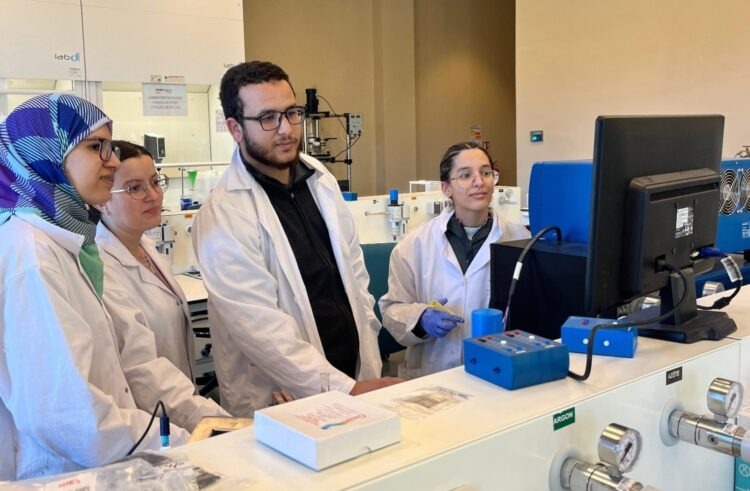
Moroccan researcher Elhoucine Elmaataouy, from the Mohammed VI Polytechnic University (UM6P), is leading innovative efforts to create high-performance, cobalt-free batteries. His research focuses on fluorine anion doping in LiNiO₂ cathodes, a method that improves battery stability and capacity while eliminating cobalt dependency.
The promise of fluorine doping
LiNiO₂, a nickel-rich cathode material, offers a cobalt-free alternative but suffers from structural instability during repeated charging cycles. Elmaataouy’s team introduced fluorine into the material through a novel synthesis process, enhancing the bonds between nickel and oxygen. This innovation reduces degradation, resulting in longer-lasting and more reliable batteries.
Using advanced techniques like operando X-ray diffraction and electron microscopy, the team discovered that fluorine doping reduces cathode volume changes during cycling by 2%, significantly improving durability. “We are competitive with current cobalt-based technologies, both in performance and cost,” Elmaataouy said.
Challenges and advancements
Despite promising results, scaling cobalt-free technologies involves significant challenges. Controlling particle morphology and evenly distributing fluorine throughout the material are ongoing hurdles. Additionally, transitioning from lab-scale tests to full battery systems requires extensive testing under various conditions.
UM6P, located in Benguerir, has become a hub for energy research in Africa, fostering innovation through interdisciplinary collaboration. Elmaataouy’s work aligns with Morocco’s broader strategy of leveraging its natural resources, such as phosphate, to develop cost-effective and sustainable battery solutions.
A strategic shift toward lithium iron phosphate
Morocco is embracing lithium iron phosphate (LFP) batteries, which rely on phosphate and iron instead of nickel and cobalt. As the world’s leading phosphate producer, Morocco is uniquely positioned to advance this technology. LFP batteries are safer, more stable, and cheaper, though they have a lower energy density compared to nickel-based chemistries.
Elmaataouy’s research extends beyond lithium-ion batteries to include sodium-ion batteries and other advanced materials, demonstrating Morocco’s ambition to lead in global battery innovation.
Toward a sustainable future
Elmaataouy emphasizes that battery development requires years of meticulous research and engineering. Public awareness about battery safety and handling is equally crucial as these technologies become more widespread.
Morocco’s commitment to ethical, cobalt-free batteries reflects a broader vision of sustainability and innovation. By combining cutting-edge research with its natural advantages, the country is poised to become a key player in the global transition to clean energy.
-
09:15
-
22:00
-
21:41
-
21:21
-
21:05
-
20:45
-
20:30
-
20:15
-
19:47
-
19:32
-
19:15
-
19:00
-
18:42
-
18:25
-
18:15
-
18:10
-
17:47
-
17:32
-
17:15
-
16:50
-
16:32
-
16:16
-
15:56
-
15:40
-
15:20
-
15:05
-
14:45
-
14:30
-
14:15
-
14:00
-
13:42
-
13:25
-
13:10
-
12:47
-
12:31
-
12:15
-
12:00
-
11:42
-
11:25
-
11:11
-
10:47
-
10:32
-
10:15
-
10:09
-
10:00
-
09:45
-
09:30
