Breaking 19:00 Morocco records further rise in refugees and asylum seekers amid shifting migration routes 18:30 Morocco’s 2030 World Cup investment boom raises fiscal risk concerns 18:15 Morocco and Russia strengthen customs cooperation with new action plan 17:35 Mohammedia: DGSN arrests French-Algerian national wanted by Interpol 17:20 Morocco Lawyers’ Strike: September 20 Meeting Could Shape the Next Phase 16:35 Morocco and China Enter a New Phase of Strategic Cooperation 16:20 Morocco Time Change 2026: Clocks Move Back One Hour to GMT on September 20 15:45 Why Nador West Med is attracting growing global interest 15:05 Morocco strengthens its position as a football hub for African teams 14:45 Crédit du Maroc and AtlantaSanad Assurance Join Forces to Support Morocco’s SMEs 14:28 Morocco Launches Major Study to Measure Sediment Loss in 10 Dams 13:38 Morocco joins Interpol operation targeting terrorism and cross-border crime 11:14 Morocco weather: orange alert for thunderstorms, hail, heat and strong winds 11:11 Morocco showcases its expertise in radioactive waste management 10:55 Casablanca Port congestion: 12-hour waits expose Morocco's logistics challenges 10:01 AVATR Launches in Morocco with Three High-End Electric Models 09:47 Fitch affirms Morocco’s BB+ rating with stable outlook 09:30 Ahmed Reda Chami stresses dialogue after EU Parliame 09:29 Mohamed Bouzoubaa Leaves MAS Fès Presidency but Remains Key Investor 09:15 FBI director praises Moroccan security expertise ahead of 2026 World Cup 08:55 Morocco calls for shift from crisis management to sustainable humanitarian solutions 08:54 Moroccan Dirham Exchange Rates: Bank Al-Maghrib Publishes September 18, 2026 Quotes 08:39 Innov Invest receives top World Bank rating after backing more than 500 startups 08:12 Morocco calls for international code of conduct to protect freedom of navigation 08:08 Spain’s opposition takes Ceuta migration crisis to the European stage 08:04 Morocco: Nasser Bourita Reaffirms Support for Saudi Arabia Amid Houthi Attacks 07:47 Morocco and Côte d’Ivoire strengthen military cooperation through joint committee 07:30 Far-right lawmakers intensify criticism of Morocco over Ceuta migration crisis 07:15 Morocco’s leadership highlighted in global efforts to counter hate speech 02:00 Morocco emerges as Africa’s only representative in the Global Public Security Index 01:36 Morocco’s Industrial Production Drops 4.5% as Automotive and Pharma Grow 00:15 Nearly 500 Doctors Set to Join Morocco’s Public Healthcare System in September 23:59 Morocco elected AFRA chair for 2026-2027 as Africa expands peaceful nuclear cooperation 23:50 Ibrahim Taik pursues his rally dream across Morocco’s desert tracks 23:30 Moroccan children enter the digital world earlier as smartphone use and online risks rise 22:59 Morocco-Sweden security cooperation highlighted by arrest of wanted Swedish national 22:20 Bank Al-Maghrib rate expected to remain at 2.25% as investors favor monetary stability 22:05 Morocco’s Oued Beht site uncovers major Bronze Age defensive structures 21:39 SIEMA 2026: Casablanca prepares to host a major showcase for Morocco’s agro-industrial transformation 21:17 Meknes investment potential highlighted by Fes-Meknes Regional Investment Center 20:55 Soukaina Glamour gets five-month prison sentence after Marrakech appeal 20:01 MAS postpones Hamid Hazzaz friendly tournament in Fès

Navigating the double complexity of AI healthcare startups

Monday 13 October 2025 - 12:50
By: Dakir Madiha
Navigating the double complexity of AI healthcare startups

Artificial intelligence promises to revolutionize healthcare by enabling faster diagnoses and personalized patient care. Yet turning that promise into tangible results proves far more challenging, as recent research by Dr. Ahmed Zahlan, a PhD graduate from the Africa Business School at UM6P, demonstrates.

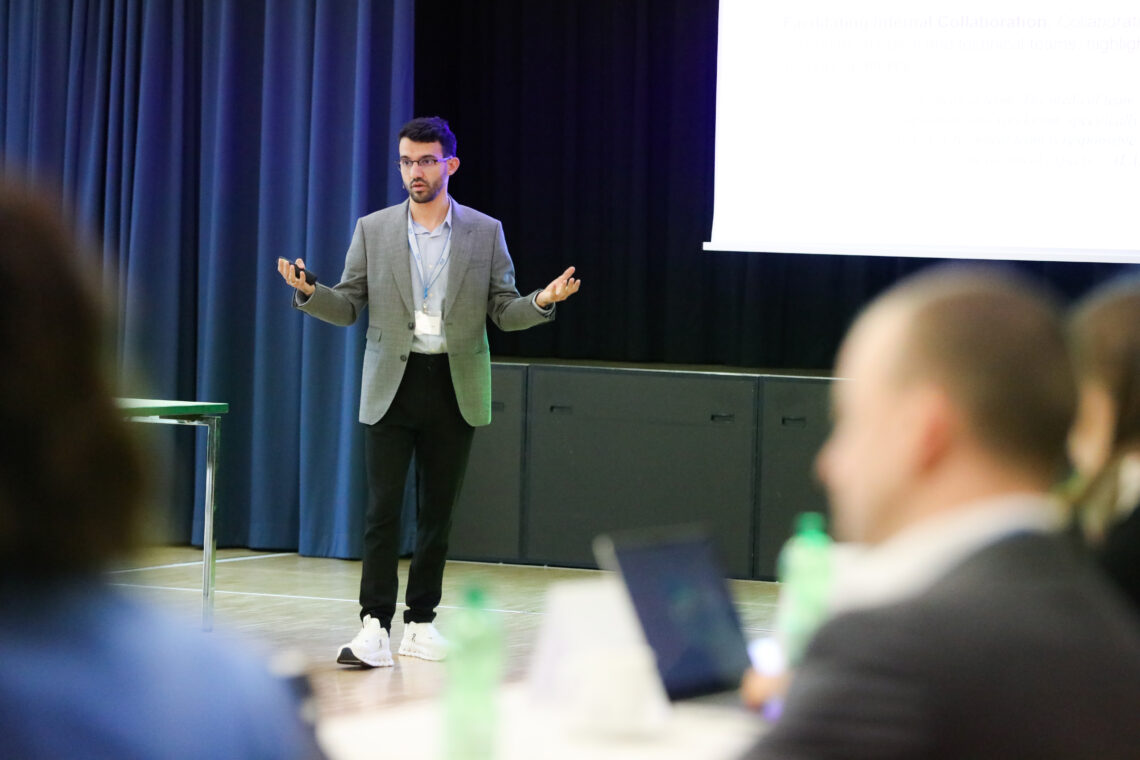
Dr. Zahlan examined the operational and ethical hurdles facing AI healthcare startups through interviews with founders of 55 ventures. His study highlights the “double bind” of merging regulated healthcare with rapidly evolving AI technologies, providing practical guidance for entrepreneurs, investors, and policymakers.

The challenge of translating AI into healthcare impact

Healthcare adoption of innovations is notoriously slow. Research shows that translating a discovery into routine clinical practice can take up to 17 years. AI adds layers of technical, ethical, and regulatory complexity. Zahlan’s study identifies mechanisms that allow some startups to scale successfully while others stall, providing a roadmap for navigating this challenging sector.

Teams over solo efforts

One key insight is the importance of diverse founding teams. Startups combining clinical expertise, technical skills, and managerial experience navigate hospital networks, clinical validations, and investor communications more effectively. “Get a doctor with you,” Zahlan advises, underscoring the value of clinician involvement for legitimacy, patient-centered design, and access to hospital collaborators.
Data as the strategic asset and the risk of AI washing

Data emerged as a critical factor. Startups with proprietary, well-curated patient datasets gain investor trust and clinical credibility. Zahlan warns against “AI washing,” where companies exaggerate their AI capabilities, risking both investor misguidance and solutions that fail to address healthcare needs. “First, find the problem,” he emphasizes, cautioning that AI should solve real issues rather than serve as a marketing label.

Regulatory strategies and sector-focused alliances

Early partnerships with hospitals, universities, and healthcare-focused incubators are crucial. Startups that align clinical expertise with large datasets and regulatory planning can achieve market clearance, as seen with Moroccan healthtech firm DeepEcho, which obtained FDA clearance for its AI fetal ultrasound analysis platform. Such examples show that African-rooted healthtech ventures can reach global markets when strategy, data, and clinical credibility converge.

Implications for Morocco’s AI healthcare ecosystem

Morocco’s AI ambitions are growing, with UM6P prioritizing regional capacity building and ethical AI solutions. Zahlan’s findings suggest near-term priorities: accelerating secure, interoperable electronic records, incorporating applied AI into medical education, and developing incubators and public-private programs for clinical validation. These steps could help translate Morocco’s AI momentum into meaningful health outcomes, providing actionable insights for founders and policymakers.


  • Fajr
  • Sunrise
  • Dhuhr
  • Asr
  • Maghrib
  • Isha

Read more

This website, walaw.press, uses cookies to provide you with a good browsing experience and to continuously improve our services. By continuing to browse this site, you agree to the use of these cookies.