

Navigating the double complexity of AI healthcare startups
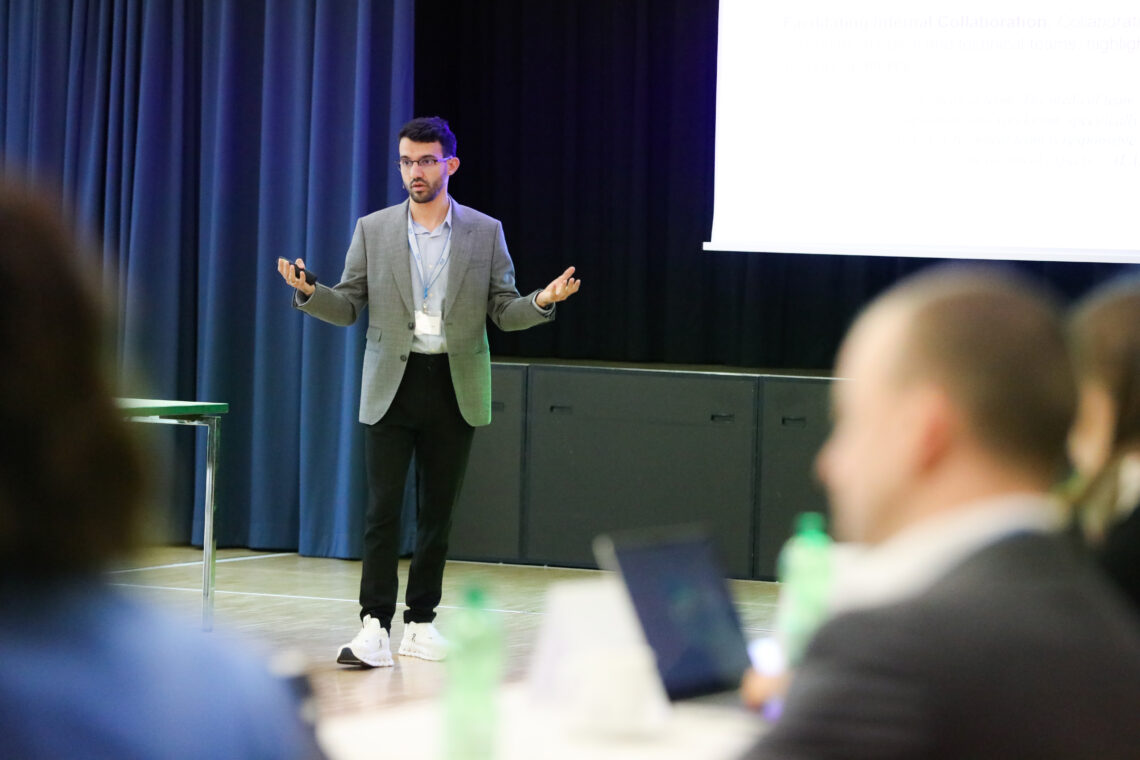
Artificial intelligence promises to revolutionize healthcare by enabling faster diagnoses and personalized patient care. Yet turning that promise into tangible results proves far more challenging, as recent research by Dr. Ahmed Zahlan, a PhD graduate from the Africa Business School at UM6P, demonstrates.
Dr. Zahlan examined the operational and ethical hurdles facing AI healthcare startups through interviews with founders of 55 ventures. His study highlights the “double bind” of merging regulated healthcare with rapidly evolving AI technologies, providing practical guidance for entrepreneurs, investors, and policymakers.
The challenge of translating AI into healthcare impact
Healthcare adoption of innovations is notoriously slow. Research shows that translating a discovery into routine clinical practice can take up to 17 years. AI adds layers of technical, ethical, and regulatory complexity. Zahlan’s study identifies mechanisms that allow some startups to scale successfully while others stall, providing a roadmap for navigating this challenging sector.
Teams over solo efforts
One key insight is the importance of diverse founding teams. Startups combining clinical expertise, technical skills, and managerial experience navigate hospital networks, clinical validations, and investor communications more effectively. “Get a doctor with you,” Zahlan advises, underscoring the value of clinician involvement for legitimacy, patient-centered design, and access to hospital collaborators.
Data as the strategic asset and the risk of AI washing
Data emerged as a critical factor. Startups with proprietary, well-curated patient datasets gain investor trust and clinical credibility. Zahlan warns against “AI washing,” where companies exaggerate their AI capabilities, risking both investor misguidance and solutions that fail to address healthcare needs. “First, find the problem,” he emphasizes, cautioning that AI should solve real issues rather than serve as a marketing label.
Regulatory strategies and sector-focused alliances
Early partnerships with hospitals, universities, and healthcare-focused incubators are crucial. Startups that align clinical expertise with large datasets and regulatory planning can achieve market clearance, as seen with Moroccan healthtech firm DeepEcho, which obtained FDA clearance for its AI fetal ultrasound analysis platform. Such examples show that African-rooted healthtech ventures can reach global markets when strategy, data, and clinical credibility converge.
Implications for Morocco’s AI healthcare ecosystem
Morocco’s AI ambitions are growing, with UM6P prioritizing regional capacity building and ethical AI solutions. Zahlan’s findings suggest near-term priorities: accelerating secure, interoperable electronic records, incorporating applied AI into medical education, and developing incubators and public-private programs for clinical validation. These steps could help translate Morocco’s AI momentum into meaningful health outcomes, providing actionable insights for founders and policymakers.
-
13:33
-
12:39
-
11:15
-
11:00
-
09:45
-
08:57
-
08:15
-
07:58
-
07:18
-
19:41
-
19:22
-
19:00
-
17:00
-
16:32
-
16:05
