

Marriage delays reshape social life across the Arab world
Marriage is taking place later than ever across much of the Arab world, as economic strain, shifting priorities and evolving social norms alter long established patterns of family formation. What was once considered the natural transition into adulthood during the early twenties is increasingly postponed into the thirties, with a rising share of women remaining unmarried beyond what many societies traditionally defined as prime marriage age.
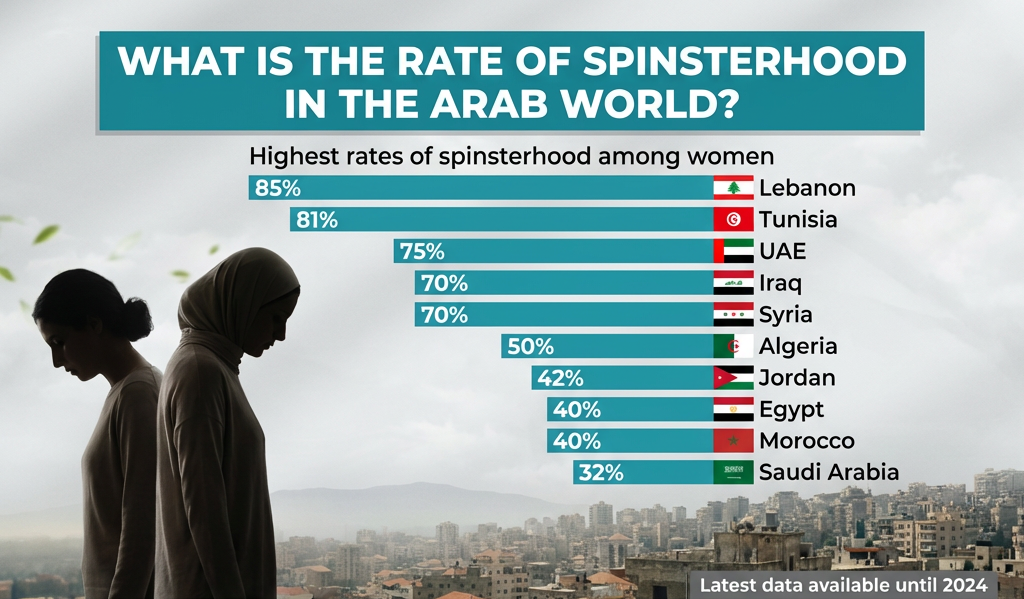
Recent demographic snapshots circulating in regional media indicate particularly high rates of singleness among women in several Arab countries. Lebanon is frequently cited as recording one of the highest proportions of unmarried women, followed by Tunisia and the United Arab Emirates. Syria and Iraq also report elevated rates, while Algeria, Jordan, Saudi Arabia, Egypt and Morocco show substantial shares of women who have not married within conventional age brackets. These figures reflect a broader regional trend rather than an isolated national phenomenon.
Economic pressure stands out as a central factor behind delayed marriage. Youth unemployment remains stubbornly high in many Arab economies, and wages often lag behind the rising cost of living. Housing prices, in particular, have surged in major cities, making it difficult for young couples to secure independent accommodation. The financial expectations attached to marriage, including dowries, elaborate wedding ceremonies and furnishing a new home, add to the burden. For many young men, accumulating the savings required to meet these social standards can take years. As a result, engagements are extended or postponed, and in some cases plans for marriage are abandoned altogether.
Education has also reshaped the timing of marriage. Women across the Arab region are spending more years in higher education and entering the workforce in greater numbers. Career aspirations and the desire for financial independence have led many to prioritise professional stability before considering marriage. This shift has pushed the average age at first marriage upward and expanded the segment of women who remain single into their late twenties and thirties. Sociologists note that for a growing minority, delaying marriage is not merely a consequence of circumstance but a conscious choice rooted in changing expectations about partnership, equality and autonomy.
Political instability and conflict have further complicated family formation in parts of the region. In countries such as Syria and Iraq, years of war and displacement have disrupted social networks and reduced economic security. Young people facing uncertain futures may hesitate to take on long term commitments. In fragile environments, marriage is often postponed until prospects improve, contributing to higher singleness rates.
Cultural expectations continue to exert pressure as well. Traditional norms surrounding suitable ages for marriage, family approval, and financial responsibilities can prolong negotiations between families. In some communities, high dowry demands or rigid criteria for acceptable partners limit opportunities for young adults to marry. At the same time, debates around gender roles and the structure of married life have intensified, with some women expressing reluctance to enter arrangements perceived as unequal or restrictive.
Digital culture has introduced another layer of influence. Social media platforms amplify images of luxury weddings and curated lifestyles, shaping perceptions of what marriage should look like. Elevated expectations regarding financial readiness or partner compatibility can encourage further delay. Online spaces also present alternative life paths, showcasing unmarried individuals who pursue careers, travel and personal development, thereby reducing the stigma historically attached to remaining single.
Demographers warn that sustained delays in marriage could have long term implications for fertility rates, population growth and intergenerational support systems. Policymakers in several countries have begun discussing measures such as subsidised housing for young couples, financial incentives and campaigns to moderate wedding expenses. Others argue that reforms must go beyond economic support and address evolving social attitudes, gender equality and employment opportunities.
The shifting landscape of marriage across the Arab world reflects deeper transformations in how young people define adulthood, stability and personal fulfilment. As economic realities intersect with changing cultural expectations, a new social map is emerging, one in which marriage remains valued but no longer follows the timeline that once seemed fixed.
-
12:45
-
12:30
-
12:15
-
12:00
-
11:45
-
11:30
-
11:15
-
11:00
-
10:45
-
10:30
-
10:15
-
10:00
-
09:45
-
09:30
-
09:15
-
09:00
-
08:45
-
08:30
-
08:00
-
23:30
-
23:00
-
22:30
-
22:00
-
21:40
-
21:20
-
20:40
-
19:40
-
18:40
-
18:20
-
18:00
-
17:40
-
17:20
-
17:00
-
16:40
-
16:20
-
16:00
-
15:45
-
15:30
-
15:26
-
15:20
-
15:00
-
14:40
-
14:20
-
14:00
-
13:40
-
13:20
-
13:00
